How to File Your Tax Return on RAMIS: A Complete Sri Lanka Guide
Filing a tax return in Sri Lanka means using RAMIS, the Inland Revenue Department's online portal. This step-by-step guide covers TIN registration, logging in, every return type — IIT, CIT, Partnership, VAT, SSCL, WHT, AIT and APIT — the 30 November deadline, the mistakes to avoid, and the Sinhala handbook that walks through every screen.
By Tharaka Jay · November 19, 2026 · 8 min read
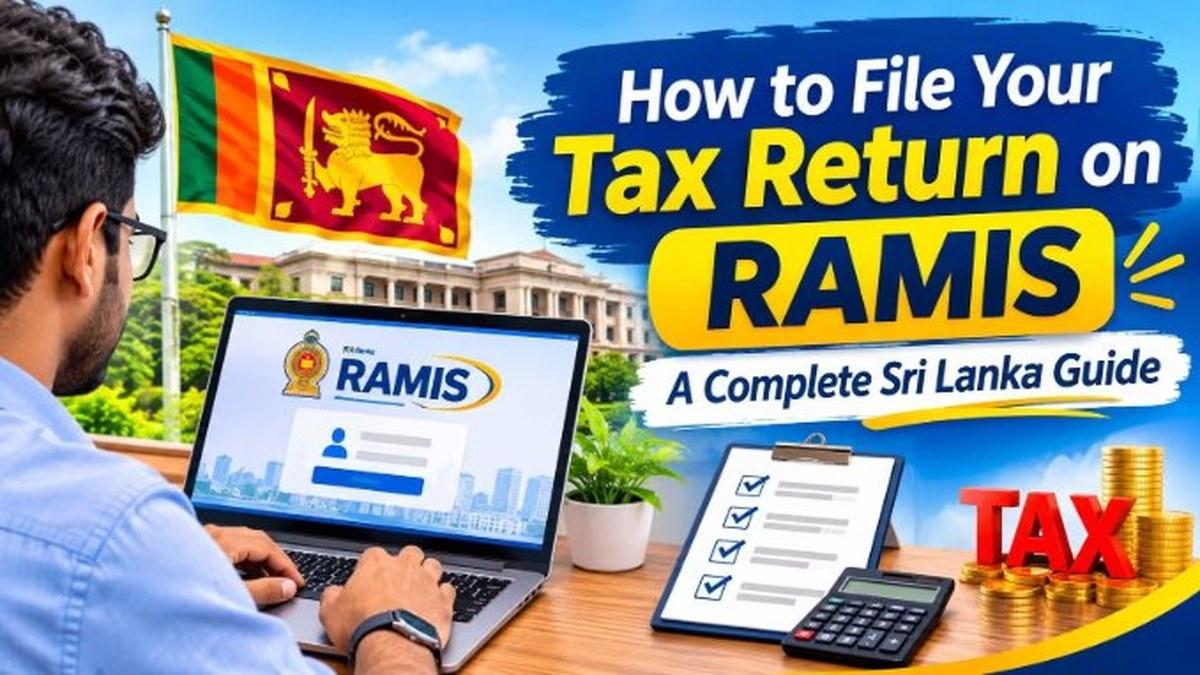
Every year, thousands of Sri Lankans open the Inland Revenue Department's RAMIS portal for the first time — and close it again within minutes. The screens are unfamiliar, the schedules are numbered, and one wrong cage can mean penalties. It doesn't have to be that way. This guide walks the complete journey in plain English: getting your TIN, logging in, choosing the right return, preparing your numbers, and submitting on time.
What is RAMIS?
RAMIS — the Revenue Administration Management Information System — is the Inland Revenue Department's online system for taxpayer registration, filing returns, making payments and keeping your tax records. Almost everything that once meant a trip to the tax office now happens inside RAMIS, which is why learning it once pays off every single year.
Step 1 — Get your TIN before anything else
Nothing in RAMIS works without a TIN — a Taxpayer Identification Number. It is your identity for every tax type, and you cannot file a return until you have one. If you earn income, run a business, or are opening accounts that ask for tax details, getting your TIN sorted is step zero.
- Your National Identity Card (NIC) details.
- Your contact details and residential address.
- Business details, if you are registering a business or company.
Step 2 — Register on RAMIS and log in
With your TIN issued, you activate your e-Services access and log in to RAMIS. Keep your login details safe — this account holds your full tax history. Inside, you will see the tax types registered under your TIN and the returns the department expects from you.
Step 3 — Know which returns apply to you
Different taxpayers file different returns. The ones covered by the RAMIS system include:
- IIT — Individual Income Tax, for employees, professionals and anyone with personal income.
- CIT — Corporate Income Tax, for companies.
- Partnership returns, for registered partnerships.
- VAT — Value Added Tax, for VAT-registered businesses.
- SSCL — Social Security Contribution Levy.
- WHT, AIT and APIT — withholding taxes, including the tax your employer deducts from your salary.
Step 4 — Prepare your numbers before you start
RAMIS rewards preparation. Before you open the return, gather your income records for the year of assessment (1 April to 31 March): your T10 certificate from your employer, business accounts if you are self-employed, bank interest and rent details, and any WHT or AIT certificates for tax already deducted. Half the stress of filing disappears when the numbers are on your desk first.
Step 5 — Fill, validate, submit — and keep the acknowledgement
Work through the return schedule by schedule, then use the Validate function and fix anything it flags before you submit. After submitting, download or print the acknowledgement and keep it safe — it is your proof of filing, and the reference you will need if the department ever asks questions.
The deadline that matters
The annual income tax return — for individuals and companies — is due by 30 November following the year of assessment. Late filing brings penalties and interest, and the portal gets busiest in the final week. Set your reminder for October, not for 29 November.
Common mistakes that cost people money
- Filing under the wrong tax type, or for the wrong year of assessment.
- Forgetting to claim WHT and AIT credits — tax that was already deducted from your income.
- Leaving out an income source because it was 'already taxed' — it still belongs in the return.
- Submitting the return but never saving the acknowledgement.
- Starting in the last week of November, when every error becomes an emergency.
Filing the return is the easy part. Filing it correctly — every schedule in the right place — is where the real work is.
Want every RAMIS screen explained, step by step, in Sinhala?
This article is the map. If you want the full journey — every screen, every schedule, every cage — I wrote the RAMIS Tax Returns Handbook for exactly that: 40 chapters and 531 pages, written in Sinhala (the book itself is in Sinhala, so every step is explained in the language most of us actually think in), from TIN registration through IIT, CIT, Partnership, VAT, SSCL, WHT, AIT and APIT returns, with free tax-law updates through the buyers' WhatsApp group whenever the law changes. It is available below for Rs. 800.
One honest note: this article and the handbook are education, not personal tax advice. They teach you to understand and file your own returns correctly — for a personal tax position, consult a qualified tax professional.
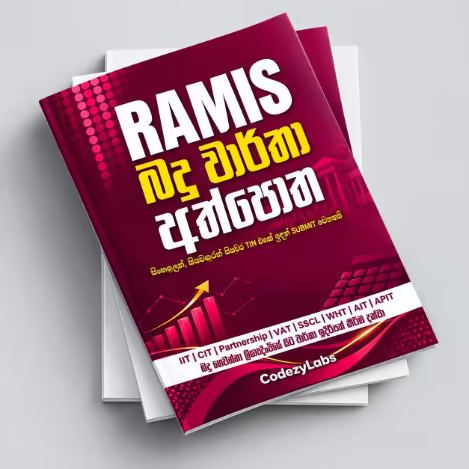
RAMIS Tax Returns Handbook
Every RAMIS return — IIT, CIT, Partnership, VAT, SSCL, WHT, AIT and APIT — explained step by step. 531 pages, with free tax-law updates via the buyers' WhatsApp group.